





AI Personalization: The Powerful Way to Boost Conversions
AI personalization has become one of the most important shifts in modern marketing, especially as artificial intelligence makes content creation faster than ever. While AI tools can now produce emails, blogs, and sales copy in seconds, speed alone does not create results. Many marketers are discovering that although their content looks polished, it often fails to connect. The AI Personalization That Converts document addresses this growing issue by explaining why generic AI output underperforms—and how intentional personalization transforms AI from a writing tool into a conversion asset.
Table Of Content
Understanding Why AI Content Often Feels Generic
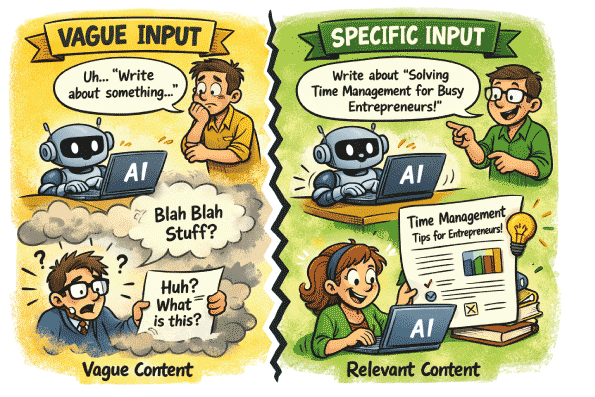
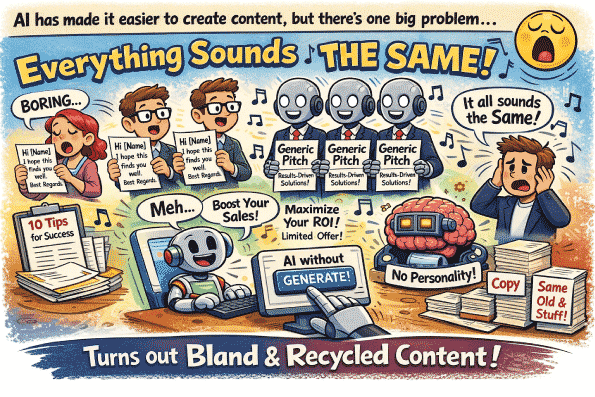
One of the central ideas in the document is that AI is not inherently flawed. Instead, AI produces bland content when it is asked to write without context, intention, or direction. When marketers rely on AI simply to generate volume, the result is safe, predictable language that mirrors what already exists online. This is where AI personalization becomes essential. Without it, AI defaults to neutral phrasing that may be technically correct but emotionally empty, leaving readers disengaged and uninterested.
What AI Personalization Really Means in Marketing
The document clearly explains that AI personalization is not about surface-level tactics like inserting a name into a subject line or swapping a few words. Modern audiences easily recognize automation, and those techniques rarely build trust. True personalization is about relevance. When a message reflects the reader’s situation, goals, or current challenges, it feels intentional. AI personalization focuses on making content align with the reader’s reality so that the message immediately feels meaningful rather than generic.
Why Personalization Directly Impacts Conversions
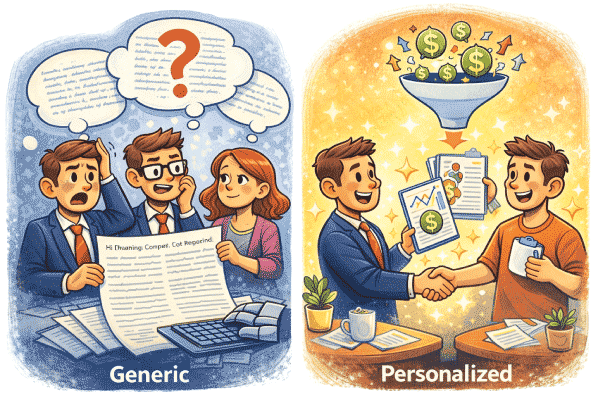
A key section of the file explores why personalized content consistently outperforms generic messaging. When content feels relevant, readers spend more time engaging with it, objections soften naturally, and decisions feel easier. AI personalization reduces mental friction by eliminating the need for readers to interpret whether a message applies to them. Instead, the content already fits their situation. This relevance is what transforms passive readers into active prospects.
The Role of Constraints in Better AI Output
Another important insight from the document is that AI performs best with boundaries, not unlimited creativity. Many marketers believe better results come from more complex prompts, but the opposite is true. AI personalization improves when the tool is given clear constraints—such as who the message is for, what stage the reader is in, and what outcome they want. These boundaries guide AI toward clarity and commitment, producing content that feels grounded and purposeful rather than vague.
Practical Ways to Apply AI Personalization
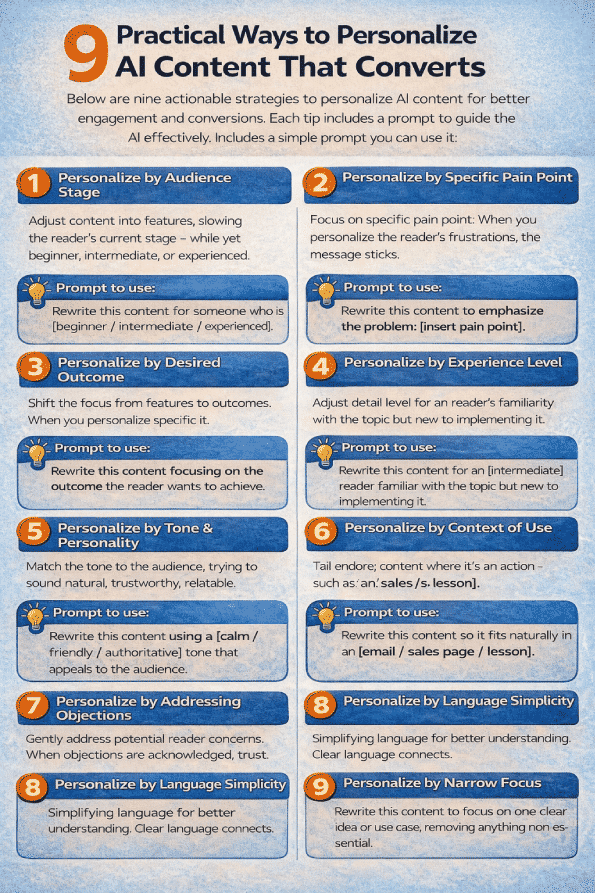
The file provides multiple practical methods for improving AI output through personalization. These include adjusting content based on audience stage, highlighting specific pain points, focusing on desired outcomes, refining tone, addressing objections, and simplifying language. Each approach demonstrates that AI personalization does not require advanced skills or rewriting everything from scratch. Small directional changes dramatically improve clarity, relevance, and connection.
Forex Market Secrets Every Trader Should Know
Conclusion:
The AI Personalization That Converts document delivers a timely and practical message: the future of effective AI content is not creativity—it is relevance. AI personalization allows marketers to move beyond mass-generated content and toward communication that feels human, intentional, and clear. When AI is guided thoughtfully, it amplifies understanding instead of replacing it. In a crowded digital landscape, AI personalization is what separates content that gets ignored from content that truly converts.